
The artist recounts his pivotal meeting with Edward Steichen, the famous photography curator of the Museum of Modern Art.
My Meeting with Edward Steichen
Many artists, from their early attempts at creative expression to their final, mature work, have been haunted by questions and self-doubt, no matter how successful their careers have been. Artists either succumb to the overwhelming emotional suffering caused by self-doubt, or they are undaunted by the challenge, accepting it as just another obstacle—the proverbial mountain that must be climbed because it is there.
After World War II, I had found the camera to be an effective instrument with which to discover the community I lived in, and in a sense, myself. I was astonished to find Walker Evans’s American Photographs in the local library, and, when I had the good fortune to attend The Photo League in the late 1940s, I was delighted to find out that there were other photographers who had similar approaches to photography as mine. Sid Grossman, who was briefly my teacher and later a well-regarded photographer himself, was both inspiring and complimentary about my work. (See Remembering Sid Grossman.)
Several years later, however, I found myself in a quandary, wondering if my work had credibility. Working without sufficient professional feedback, I decided to arrange a meeting with Edward Steichen, then the Director of Photography at the Museum of Modern Art (MOMA).
I do not recall whether I wrote or called for an appointment, but there wasn’t any difficulty in obtaining one. What I do remember is my enthusiasm as I loaded my carrying case with photographs of various sizes, fitting them in, layer upon layer, like a jigsaw puzzle. The case contained early work taken of Brooklyn—street activity, outdoor pushcarts, and the quaint signs merchants applied to shop windows in Brownsville and East New York. I also included newer photographs of New York City, which emphasized sunlight and how it played on people within the caverns created by the city’s huge, overwhelming skyscrapers. Some of my favorite pieces, such as Bryant Park, Horse and Wagon, Wall Street, and Snowstorm, featured these scenes.
I met with Mr. Steichen in the mid-morning on a clear, sunny day. I was somewhat apprehensive about our meeting, as I ordinarily might be when someone was about to critique my work. What kept me calm was my naïveté about this special occasion. I was not entirely aware of Steichen’s reputation as the “Dean of Photography.” I certainly had no idea how memorable this meeting would be.
After receiving a pass in the lobby of MOMA, I took the elevator to the Photography Department, where I was ushered into Mr. Steichen’s office. As I held out my hand to greet him, I noticed his steel-rimmed glasses and white hair. He was most cordial, asking me to put my case on his desk and inviting me to sit across from him. His kind manner put me at ease immediately. He made me feel as though I was going to show my work to a friend.
During these early years, I worked with minimal equipment for developing and processing my prints. A dry-mounting press was expensive even then. I adapted a clothes iron with which to dry-mount my work, using the kitchen table for support. I used the cardboard from the boxes, which held photographic paper as backing. Later I moved up to Bainbridge board. At that time, most photographers were not concerned with print longevity. (Mounting and matting with acid-free material, along with the technique for archival processing, was a future development.) Years later, I tried to remove a number of photographs from the cardboard backing as a space-saving measure. They were so firmly fixed that many prints were ruined in the attempt—an unfortunate testimonial to my dry-mounting skills.
It was difficult to transport my multi-sized photographs. I needed a carrying case that would hold my small and medium-sized work. Equipment sources, like the photographic catalogues we have today, were hard to find. The only solution was to devise a handmade carrying case. I proceeded to make one, measuring 20 x 30 x 3. It had a wooden frame, with beaverboard nailed to the top and bottom, and metal protectors nailed on the corners. A leather handle was screwed into the wood. The case was finished with a brown stain and secured with two black straps around the front and back.
As I proceeded to unloosen (sic) the straps, I noticed how Steichen stared at the carrying case. Somewhat embarrassed, I explained why I had to make such a box. He surprised me by complimenting my efforts, and commented, “People today don’t usually hand-make such things.” He was so keen about the case that I feared it would overshadow my work.
However, Steichen carefully picked up my photographs and held each one briefly as he examined it. He put the prints aside as he finished with them, piling them on top of each other. After reaching the last print, he began to put them back into the case, looking at each one again. It was then that I asked, “Should I continue photographing?” He looked up and answered, “Yes, of course.” There was no hesitation or doubt in his reply. (It was years later that I fully realized the significance of his positive attitude toward my work. There was a story of a bank teller who had shown his photographs to Steichen. Being kind and tactful, Steichen advised the young man to keep his day job and work towards becoming a bank president.)
While he was looking through my photographs, Steichen put several prints aside. He chose three, asking if he could keep them for further consideration, and I told him he could. Two of the prints were Bryant Park and Two Women. The third was Snowstorm, an early print I made when I was on my way to Sid Grossman’s class, during a snowstorm in New York City.
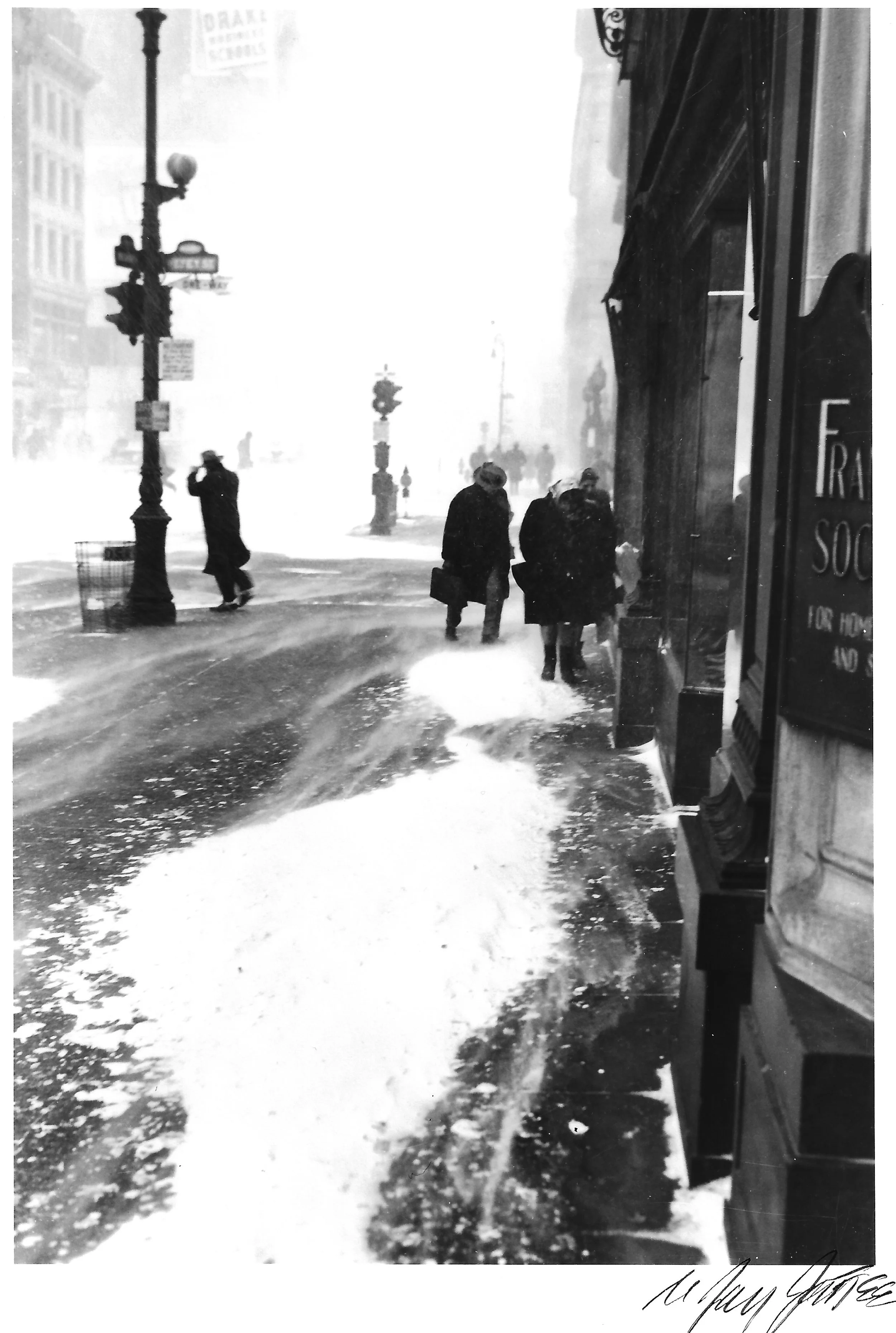
Snowstorm, NYC 1947.
The meeting lasted for about an hour. After some polite conversation, I thanked him for his time and interest, shook hands again, and left. Some weeks later, Miss Dee Knapp, who was then Mr. Steichen’s assistant, contacted me. She indicated that there was a small fund available to purchase new work and asked if I would accept $5 each for Bryant Park and Two Women. Although I thought the sum was small, I was pleased that MOMA valued my work, and knew the importance of including it in their permanent collection, so I accepted the offer.
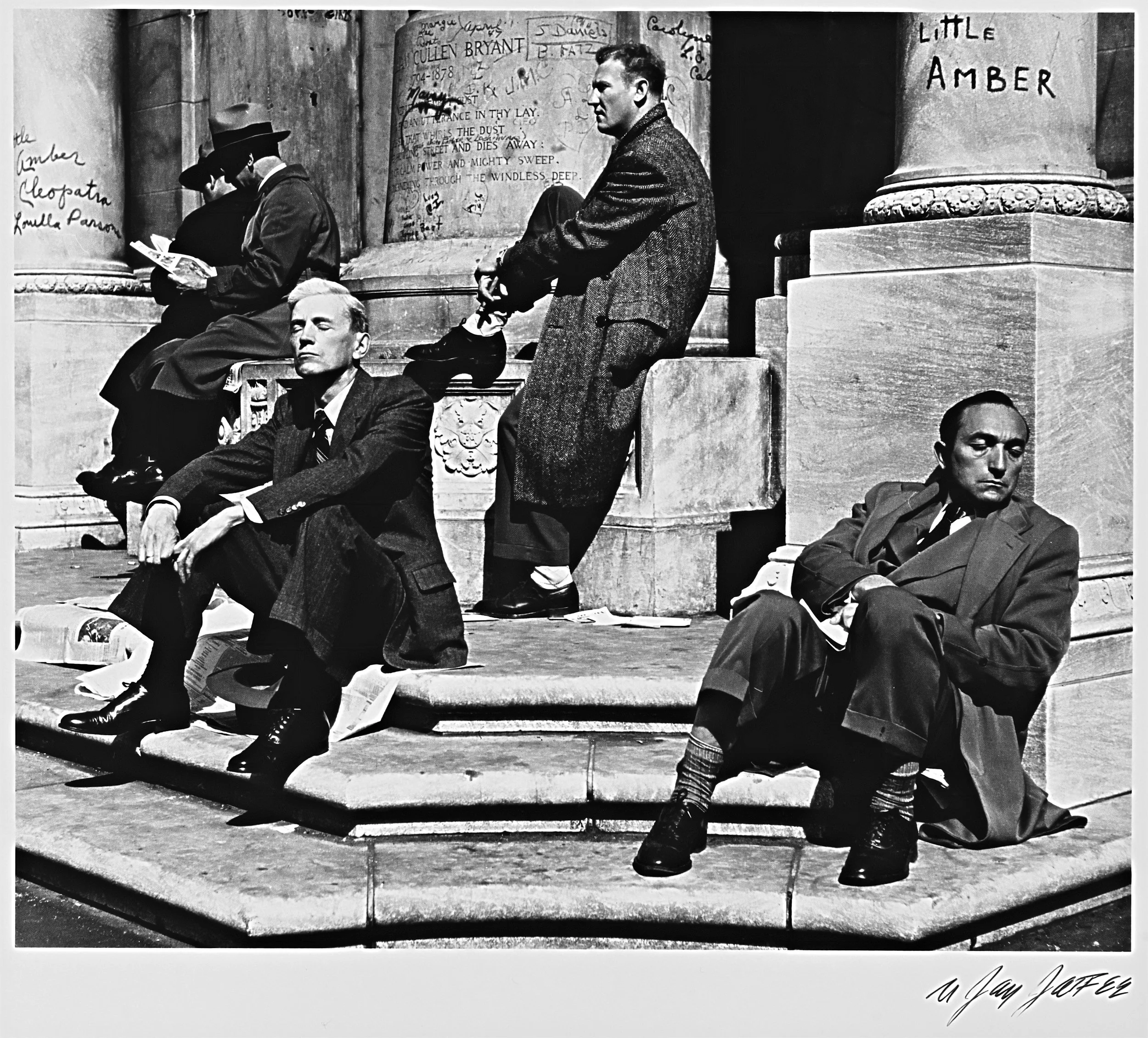
Bryant Park, NYC 1953.
The show was housed in a room off the main lobby of MOMA. In the late 1940s and into the mid-1950s, it was customary to show photographs for personal viewing or public showings by dry-mounting them on double-weight board and “bleeding” the print. A Stanley knife, with a heavy metal ruler, was used to cut away the white margins, leaving nothing to interfere with the image. To exhibit these photographs, porous oblong panels, painted with matte white or light gray, were hung from the ceiling with thin wire. Overhead track lighting, used as reflective light, added a softness to the photographs and to the room itself, enhancing a human quality that much of the work of that period already expressed.
The photographs, often under 8 x 10, were horizontal, vertical, or square. Although photographic paper came in standard sizes, few photographers worked within the commercial format. Show organizers had to be creative in the use of space and the proper placement of prints, so that each print could be viewed for its own value. A checkerboard approach was used for a show with many photographs, which were fixed to the hanging panels with short pins pushed into the corners of the double-weight boards. This was how MOMA hung the “51 American Photographers” show.
Although such a show today would be a major event, it came and went without much critical attention. Not long after, another show organized by Steichen, “Family of Man,” became MOMA’s blockbuster.
Jacob Deschin, who was the photography critic for the New York Times during this period, and well known for his books on photography, notes in Say It with Your Camera:
It would be more correct to say that Steichen must be considered chiefly as the symbol and hope of all forward-looking photographers who would like to see camera work placed on the high level of public opinion now enjoyed by other arts. Steichen is, in effect, the articulate representative of a body of progressive thinkers that is growing ever larger in this country, and his series of shows is one of the most significant contributions to photographic advancement in many years.
No receipt or paperwork followed my visit with Steichen, and I eventually forgot about Snowstorm. In 1975, when I was compiling my book, N. Jay Jaffee: Photographs 1947–1955, I discovered that not only were Bryant Park and Two Women still at MOMA (in mint condition), but so was Snowstorm—“on loan from the photographer.”
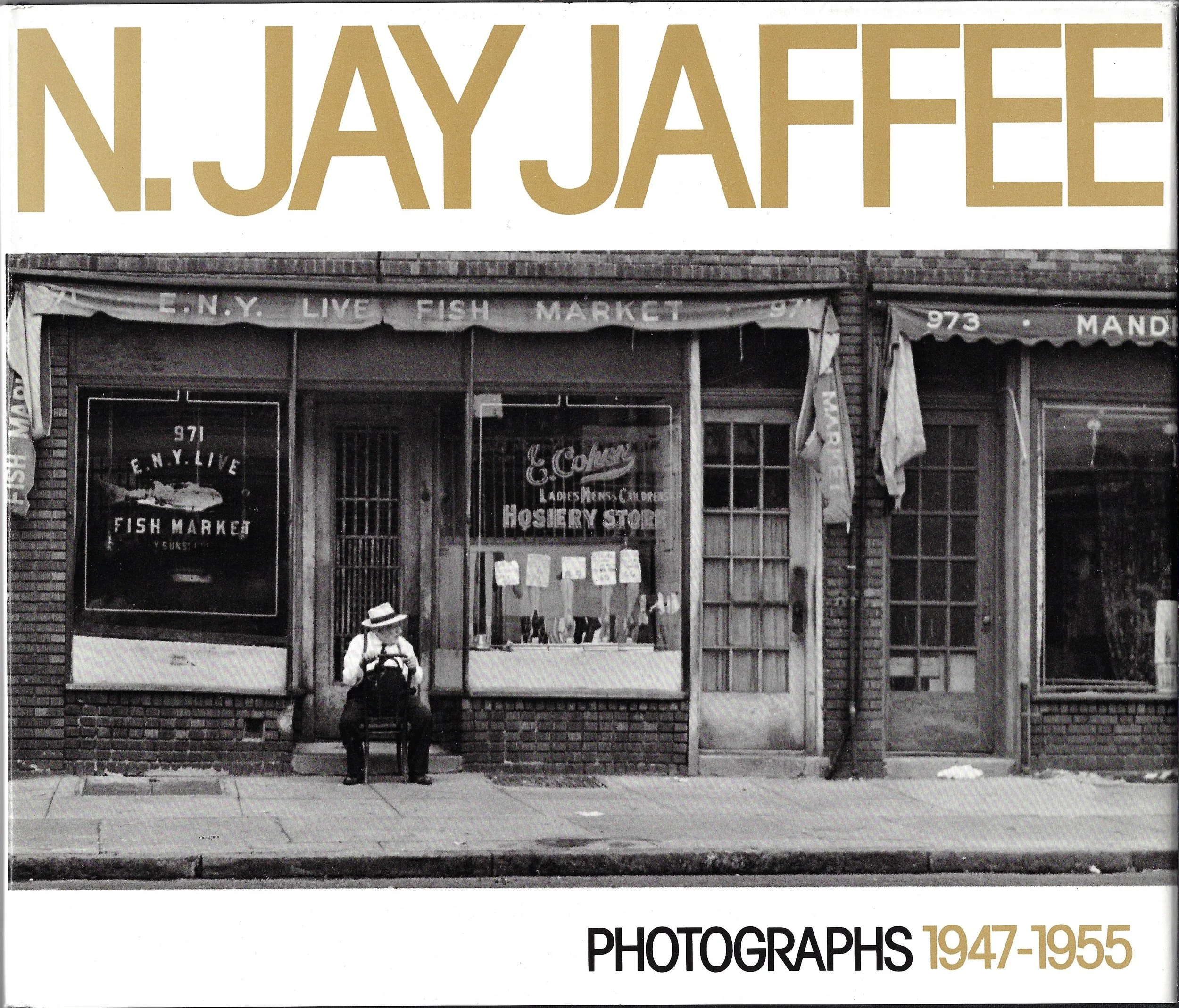
My book was published the following year. It was dedicated, in part, to Mr. Steichen, whose “perception and kind acceptance gave me the continued confidence without which none of this would be realized.” To commemorate the publication of the book, I sent a letter to John Szarkowski, who had become the Director of Photography at MOMA, telling him I was gifting Snowstorm to the museum’s collection.
It was many years that I became aware of what a turning point my meeting with Steichen was, and how the memory of his warm reception helped me to battle the demons of questioning and self-doubt during my life’s journey. In spite of other responsibilities, I continued photographing and provided a considerable body of work. Steichen’s approval nourished my creative spirit. Still sustained by that eventful day and subsequent MOMA show, I have finally turned my complete attention to photography. It certainly has been a long time coming.
© 1994 N. Jay Jaffee. All Rights Reserved.
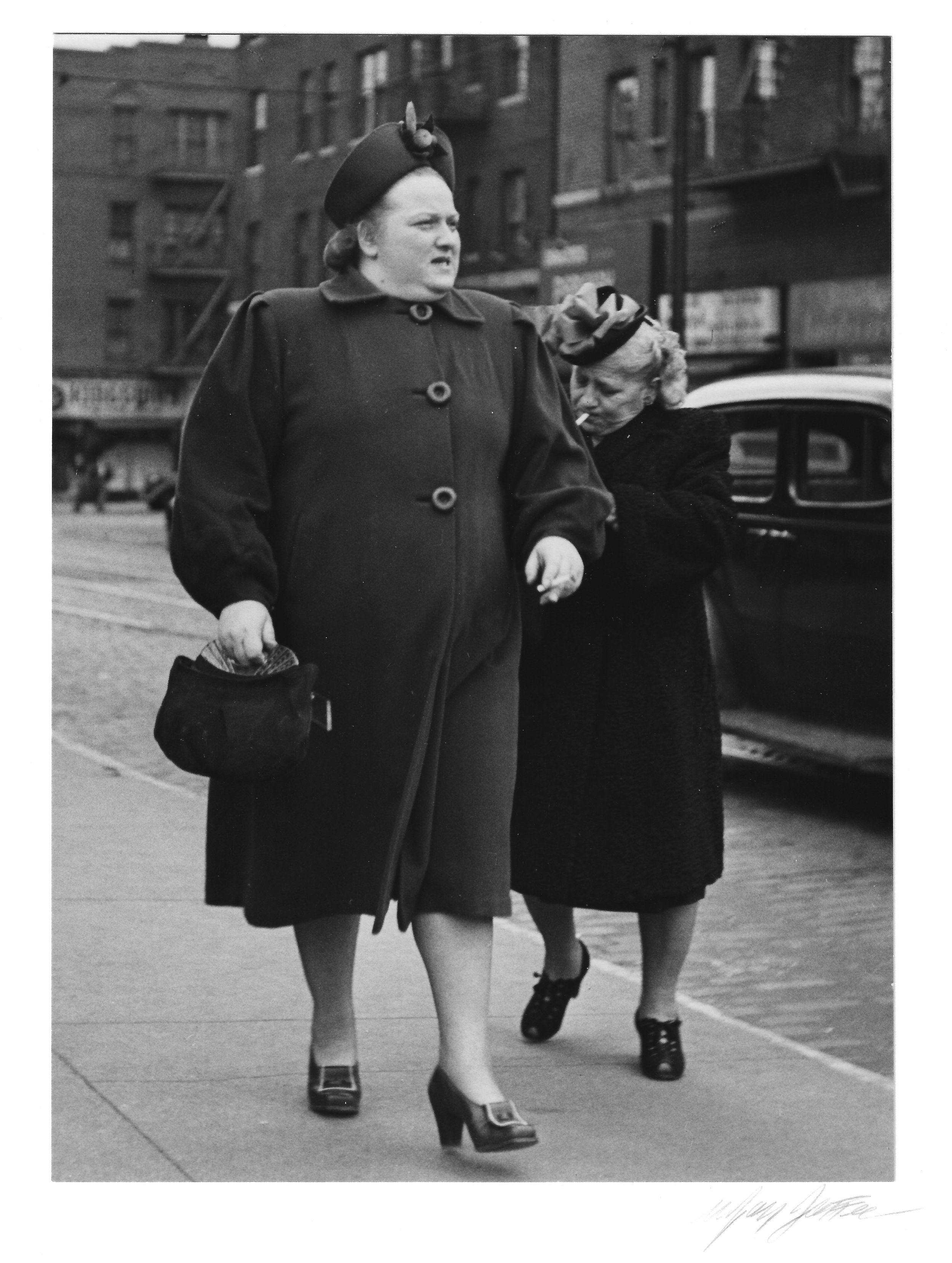
Two Women, Kingston Avenue, Brooklyn 1950.
Six months later, I learned from the museum that they were mounting a show organized by Mr. Steichen called “51 American Photographers.” Bryant Park and Two Women would be shown (listed as “by Nat Jaffee”). Some of the now-legendary photographers in that show included Harry Callahan, Robert Frank, Lotte Jacobi, and Irving Penn. Many were young photographers like myself, serious artists who had a few years of hard work behind them and whose photographs showed promise.